


Gwaredu Scab
Mites
If you suspect your flock has sheep scab, click here to contact us on
01554 748576
The life cycle of Psoroptes Ovis — the mite which causes scab in sheep.
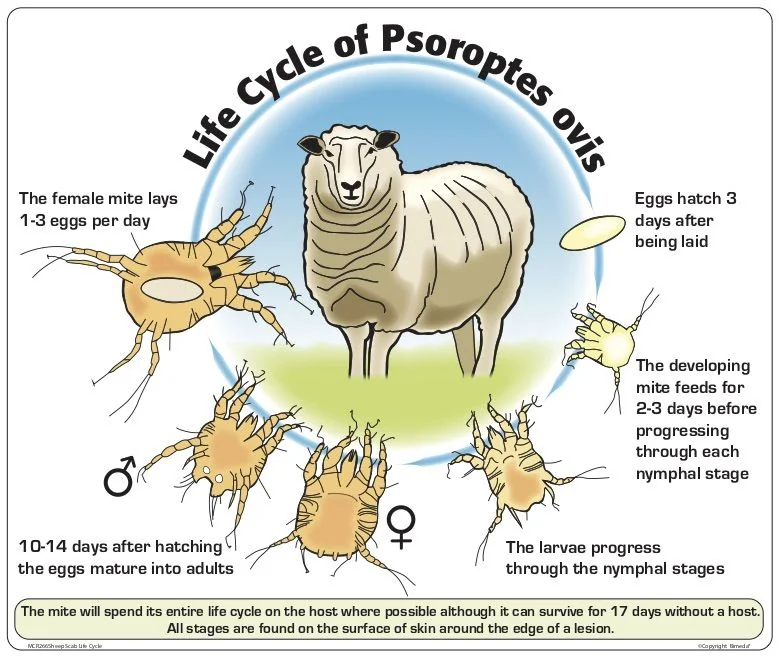
Sheep Scab Lifecycle — picture courtesy of Bimeda
Is scab a notifiable disease?
Sheep Scab is a reportable disease but poses no risk to human health.
Under the Sheep Scab Order 1997 it is a criminal offence if owners or keepers of sheep fail to treat sheep visibly affected with sheep scab.
Local Authorities can control the movement of sheep affected by sheep scab, and require treatment of those sheep if necessary.
What are the treatment options for sheep scab?
There are two types of treatment available:
Organophosphate Dip
- Blocks nerve transmission in a molecule common to the mite, sheep and human users.
- Full PPE is required for all users.
- Sheep must remain in the solution for at least one minute with the concentration maintained.
- If used correctly, protection lasts 60 days.
Macrocyclic Lactones
- Typically used as wormers — not all products kill mites, so read the datasheets carefully.
- Injection site, dose and withdrawal periods differ by product; consult your vet or SCOPS for guidance.
How can I prevent my sheep from getting scab?
Biosecurity measures are the most effective way to prevent the spread of sheep scab:
- Quarantine new stock before mixing with the flock.
- Isolate any affected stock immediately.
- Double-fence and maintain good boundary fences.
- Blood-test to diagnose scab before clinical symptoms appear.
- Treat at times of risk.
Discuss any concerns, treatment plans, and preventative measures with your vet.
What are the signs and symptoms of sheep scab?
During the early stages, infestations are not obvious — it can take 40–50 days after infection before signs appear. Early mite numbers are low and lesions are virtually undetectable.
First visible signs: restlessness, rubbing against fence posts, soiled and stained wool, head tossing, and loose tags of fleece.
Watch out for:
- Rubbing and scratching against fence posts.
- Nibbling and biting their fleeces.
- Dirty areas of fleece from scratching, especially behind the shoulder.
- Clean areas of fleece where sheep have nibbled.
- Broken fleece on the sides of sheep from biting and scratching.
- Dull or depressed sheep standing apart from the rest of the flock.
How do sheep become infected with scab mites?
Sheep scab is highly contagious. Spread occurs via direct contact with infected or carrier sheep, and also via contaminated wool, equipment, fences, sheds, and fields.
Mites survive on average 17 days off the sheep in wool tags and skin flakes. This means infection can occur without any sheep-to-sheep contact — through trailers, shearing equipment, marts, and shared grazing fields.
What is sheep scab, and how does it affect my sheep?
Sheep scab is one of the most contagious parasitic diseases of sheep in Great Britain. It is an allergic dermatitis caused by the highly parasitic Psoroptes ovis mite.
The female mite lays one or two eggs daily in the fleece for approximately 40 days. The mite feeds on oils and proteins on the skin surface, causing intense irritation and breakdown of the skin, leading to profuse itching and patchy wool loss.
Within 6–8 weeks, mite numbers multiply massively, the lesion spreads across the body, and sheep rapidly lose condition. Clinical disease becomes apparent and sheep can suffer severe weight loss.